The Pressing Trap: How Teams Win the Ball Before the Tackle
Why do teams invite a pass and then swarm the receiver? Learn to spot pressing triggers, touchline traps and the space a high press leaves behind.
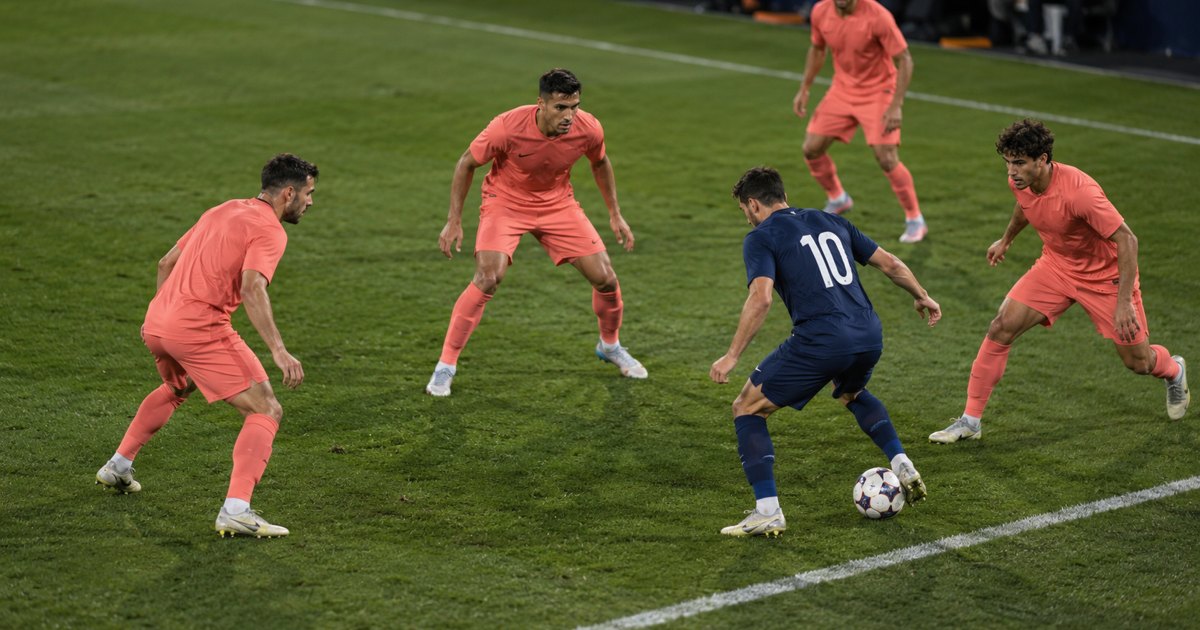
A centre-back looks up. The winger is free near the touchline, so the pass seems obvious. Yet as the ball travels, three opponents move: one towards the receiver, another across the inside passing lane, and a third towards the easy return ball. What looked like an escape route suddenly feels like a cage.
That is the appeal of a pressing trap. The defending team is trying to influence where the next pass goes, then apply pressure when the receiver has fewer ways out. To spot it, watch the players away from the ball as closely as the one making the tackle.
The first sprint is only part of the story
Pressing works through relationships. If a forward chases alone while teammates leave passing lanes open, the opponent can simply play around that pressure. A coordinated team closes the distances around the ball and makes the next decision harder.
FIFA's analysis of team organisation out of possession explains how compact positioning can restrict central options and encourage the ball towards the wing. Our viewing tip is simple: pause just before the first player accelerates. Are teammates close enough to cover the receiver's alternatives?
What makes a team decide to press?
A pressing trigger is a cue to act together. England Football's pressing-zones coaching session identifies examples such as a heavy touch, hesitation, a slow pass or an opponent facing their own goal.
These moments matter because they can delay the next action. A receiver stretching to control a loose touch may need an extra step before passing. That gives the nearest defender time to close down, provided the supporting players also react.
Try watching for these cues in your next match:
- The touch: does the ball stay within easy reach, or does it run away from the receiver?
- The body position: can the player see forward, or must they turn before progressing?
- The support: is there a clear nearby outlet, or has the defending team blocked it?
A cue is an opportunity, not a promise of a turnover. A skilful receiver can still escape.
Why the touchline is such a useful partner
In the centre of the pitch, a player can potentially move or pass in many directions. Close to the touchline, one side is already closed. A defending team can use that boundary to make the remaining options easier to anticipate.
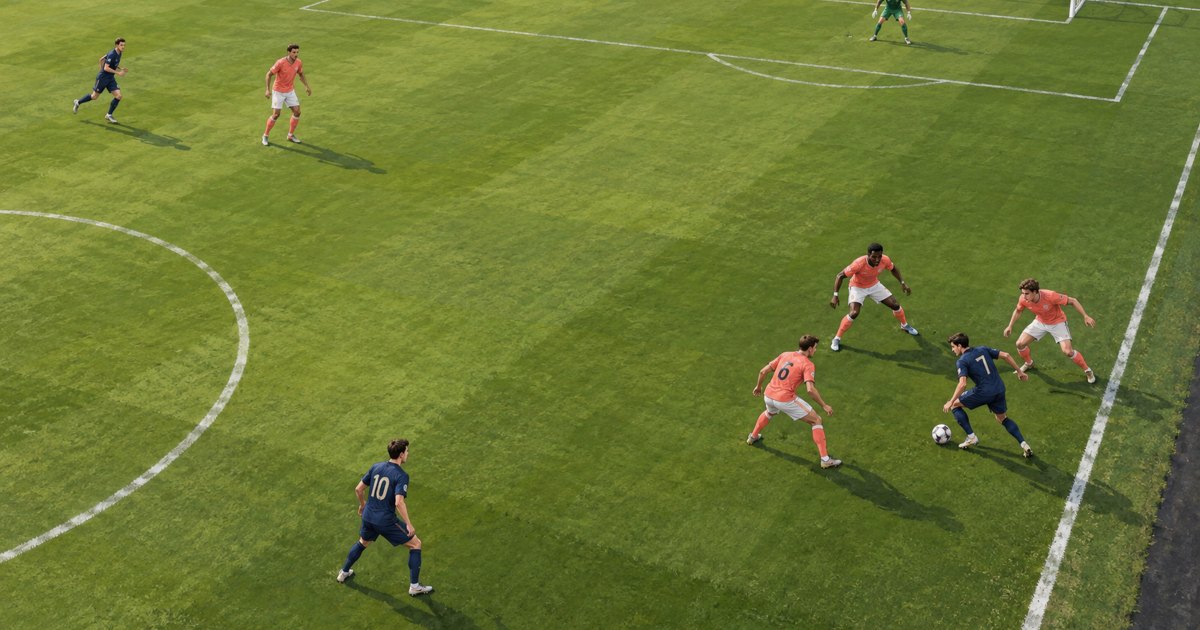
Imagine a winger receiving with the sideline behind them. The first defender approaches from inside the pitch. A teammate covers the short pass infield. Another watches the return ball. The aim is to make the winger's next action predictable: a hurried pass, a contested dribble or a ball down the line.
This is a simplified example, not a diagram of every team's system. The approach angle and the supporting positions change with the opponent's shape and available passing options.
The space behind the press is the trade-off
Pressure near the opponent's goal can produce an attractive attacking position after a regain. But sending players forward also creates space elsewhere. If the opponent passes through the first wave, those pressing players may suddenly be behind the ball.
FIFA's discussion of compact defensive blocks highlights that balance: a high defensive line can leave space behind, while compactness in one area concedes room in another.
Our interpretation is that you should judge both sides of the exchange. Do not count only the exciting regains. Watch the occasions when the opponent escapes, and ask whether the covering defenders can deal with the next pass.
A high press is different from counter-pressing
A high press describes pressure applied high up the pitch while the opposition has possession. Counter-pressing describes the immediate response after losing the ball. A team can attempt both, but they start from different situations.
That distinction helps explain why two similar-looking sprints have different purposes. One may be part of a planned shape against an opponent building from the back. The other may be a quick attempt to stop a counter-attack before it develops.
Watch one sequence all the way through
For a more rewarding way to watch football, follow a single build-up from the goalkeeper rather than waiting for a highlight. Identify the pass the defending team seems happy to allow, the cue that starts the pressure, and the outlet the receiver tries to use.
Then follow what happens next. If the ball is recovered, does it lead to a useful chance? If the opponent escapes, who protects the space behind? This gives you a clearer account of the tactic than the tackle alone.
Tactical observations also need to stay separate from match predictions. A team that presses aggressively is not automatically likely to win or produce a high-scoring game. For the difference between a goals market and a result, read our Over/Under 2.5 guide, or explore our guide to reading football predictions.
Predictions are information and analysis, not guaranteed outcomes or profits. Read the specific market and fixture details before making your own decision.